Should You File an Insurance Claim for Water Damage? Austin TX Restoration Expert Explains
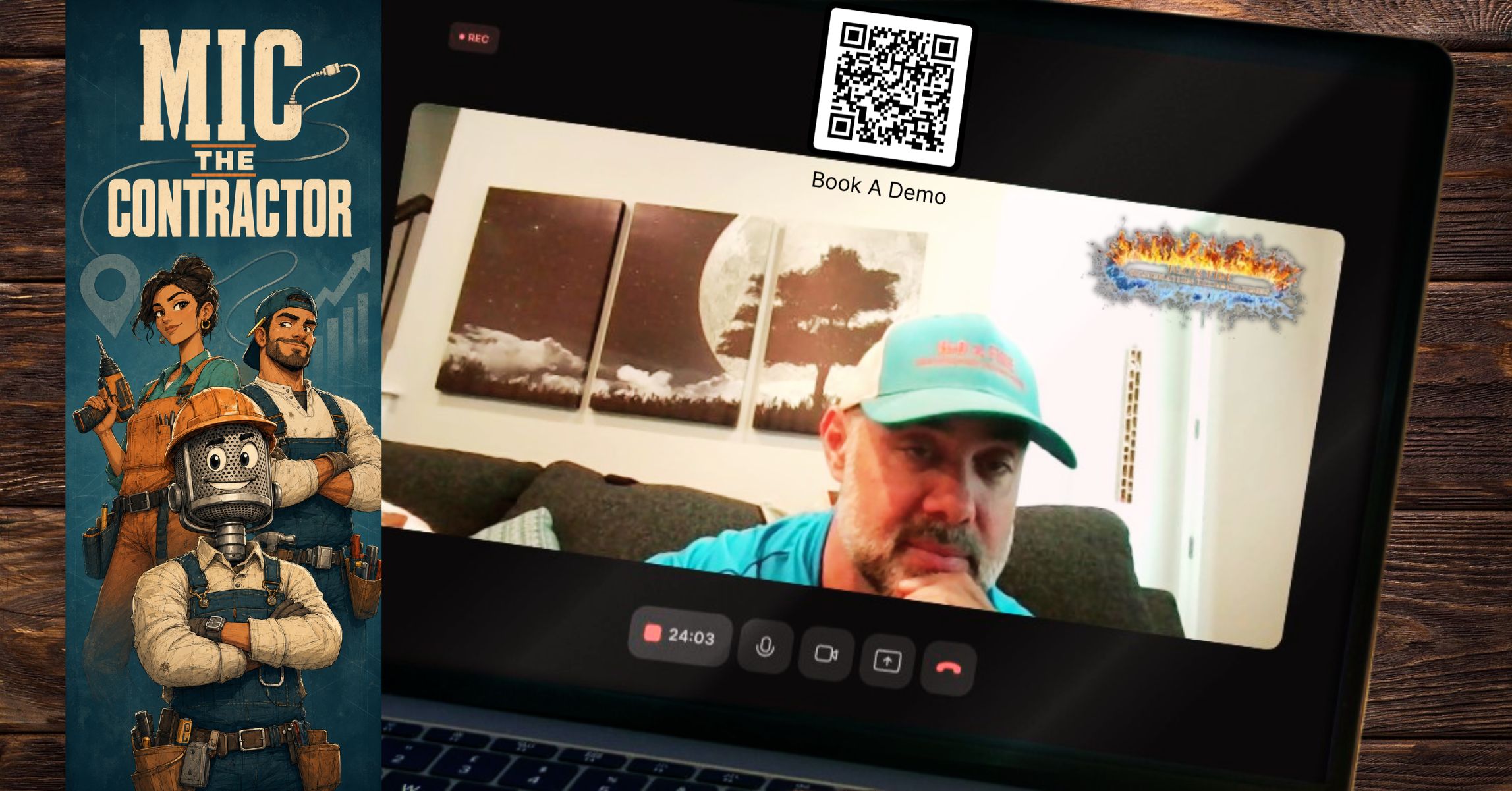
Featured on Mic the Contractor: a conversation with Wes Agner, of H20 & Fire. Wes is an IICRC-certified water mitigation and restoration specialist, Austin, Texas area.
Summary
A toilet overflow, a wet ceiling, a homeowner googling "will insurance cover this" at 11 p.m. — it's one of the most common home emergencies, and one of the most misunderstood.
We sat down with Wes Agner, who runs a small, IICRC-certified water damage restoration company, to walk through exactly how these calls get handled: when to file an insurance claim versus pay out of pocket, why hidden moisture is more dangerous than visible damage, and why his team sometimes turns down paying work on purpose.
Below is the full breakdown, organized so you can jump straight to what you need.
Table of Contents
-
Meet Wes Agner of H20 & Fire
-
Should You File an Insurance Claim or Pay Out of Pocket?
-
Why Texas Homeowners Are Paying More for Water Damage Right Now
-
The Restoration Niche Nobody Talks About: Hoarding Cleanouts
-
Why the Best Restoration Companies Sometimes Turn Down Work
-
The #1 Mistake Homeowners Make After a Leak
-
How to Tell Where a Leak Is Really Coming From
-
Documentation: Your Best Protection in Any Claim
-
What IICRC Certification Actually Means
-
When to Call a Leak Detection Specialist
-
Key Takeaways
-
FAQ
Meet Wes Agner
Wes owns and operates a small water mitigation and restoration company near Austin, Texas. His team is lean — himself plus four technicians, one of whom also handles estimating.
They aim to be on-site within four hours of a call. Every job follows the ANSI/IICRC S500 Standard, the industry-recognized protocol for water damage restoration.
What makes Wes worth listening to isn't the certification alone. It's how he talks through decisions most homeowners never see the logic behind.
Should You File an Insurance Claim or Pay Out of Pocket?
This sounds simple. It usually isn't.
Wes explained a real call he'd just taken: a toilet overflowed upstairs, water sat for a few days, and discoloration appeared on the ceiling below. The homeowner wasn't sure if she should file a claim.
Here's the math most people miss:
-
Insurers often give discounts for staying claim-free for a set period.
-
Filing a claim can mean losing that discount, which functions like a deductible or premium increase.
-
A repair estimate lets you compare the self-pay cost against the true cost of filing.
As Wes put it: "That water loss, to me, sounds like a 99.9% chance it's covered — unless she has some odd language in her policy."
Wes's approach: give the homeowner a real repair estimate, offer a self-pay discount as an alternative, and let her decide with real numbers instead of guesses from a forum post.
Why Texas Homeowners Are Paying More for Water Damage Right Now
This detail applies well beyond Texas, but Texas is where it's hitting hardest.
Wes's own homeowner's insurance dropped coverage for his house this year, forcing him to switch policies. Before leaving the state, his insurer had already raised the roof deductible to 2% of the home's value — up from the standard 1%.
On an average $300,000 home in his area, that's roughly:
-
Old deductible (1%): ~$3,000
-
New deductible (2%): ~$6,000
That's a $3,000 swing before insurance pays a dollar. It's also why homeowners increasingly need a fast, accurate estimate at the time of the call — not a vague promise to "bill the insurance and see what happens."
The Restoration Niche Nobody Talks About: Hoarding Cleanouts
One of the more surprising parts of the conversation: Wes's company regularly partners with professional organizers who work with hoarding situations.
When an organizer takes on a job that's too large or too complex for their scope — often involving actual water intrusion or structural issues — they call Wes's team.
The range of situations he described:
-
Paper, cardboard, and mail piling up until rooms become impassable
-
Food and diaper hoarding
-
Homes where pets have taken over entire rooms
-
One homeowner who hadn't let anyone inside for over a decade
Wes was thoughtful about how he described this work. The common thread in every case: once the space is cleared and repaired, the gratitude from homeowners is immediate and emotional.
As Wes put it: "They're actually just so happy... I get tears and hugs when it's over."
This is a case study in niche-building: a referral relationship built with one specific type of professional (organizers), almost invisible to competitors, that consistently generates high-trust, high-need work.
Why the Best Restoration Companies Sometimes Turn Down Work
This is the part of the conversation with the clearest business lesson in it.
Wes described a customer with minor water damage on wood floors. She'd already dried it out well on her own — fans, towels, the basics done right. He could have set up equipment and billed her for a full job.
Instead, he told her directly that it likely wasn't worth the cost:
As Wes put it: "You're so close to being dry, I don't want to take this money if you don't feel like it's needed."
Why turn down paying work? Because trust compounds. Wes estimates that roughly 90% of his business comes from word-of-mouth and referrals — only about 10% comes from people finding him online. Every honest interaction, even one that generates zero revenue that day, becomes the story a customer tells a neighbor, a friend, or a contractor asking "who do you call for this?"
The #1 Mistake Homeowners Make After a Leak
Ask any restoration professional what goes wrong most often, and it's rarely about the initial damage. It's about what happens after.
The mistake: assuming that because you can't see water anymore, it's gone.
Here's why that assumption is dangerous:
-
Water can sit inside wood floors, drywall, or insulation with no visible sign on the surface.
-
Ceiling stains typically don't appear until the area starts drying out — meaning visible discoloration often means the damage has already been present for a while.
-
Under IICRC standards, mold can begin developing in 48 to 72 hours if moisture isn't properly addressed.
Wes's field data point: when a customer says they've already cleaned it up themselves, "it's more like ninety-nine out of a hundred, there's still work to be done."
Bottom line: if there was standing water, get a moisture check — even if everything looks dry.
How to Tell Where a Leak Is Really Coming From
Water rarely stays where it started. It follows the path of least resistance, which means visible damage can be several feet from the actual source.
A common example Wes gave: a roof leak enters through a damaged shingle or ridge cap, then travels down a rafter before dripping — meaning the water stain on your ceiling may be nowhere near where the leak actually is.
This matters for two reasons:
-
Repairs done at the visible damage site without finding the real source will fail again.
-
Insurance coverage sometimes hinges on identifying the exact source — no known leak location can mean no coverage.
That's part of why professional inspection matters more than DIY guessing, even for experienced homeowners.
Documentation: Your Best Protection in Any Claim
If there's one habit Wes pushes hardest, it's this: take pictures immediately, of everything.
-
Photograph the damage before cleanup starts.
-
Photograph items you want replaced (including things like ruined towels).
-
Take video of active leaks if it's safe to do so.
-
There's no such thing as too many pictures — his team photographs every room from every angle before starting any job.
This documentation serves two purposes:
-
For insurance: it supports the claim and helps justify the equipment and time used, based on IICRC-calculated drying requirements rather than guesswork.
-
For resale later: many states require disclosure of past water damage when selling a home. A clean, professional drying record turns "we had a leak" into "we had a leak, and here's the certified documentation showing it was resolved correctly."
What IICRC Certification Actually Means
The Institute of Inspection, Cleaning and Restoration Certification (IICRC) sets the industry standard for water damage restoration in the United States.
The ANSI/IICRC S500 Standard defines:
-
How water damage is categorized (by contamination level) and classed (by how much material is affected)
-
Required psychrometric monitoring (temperature, humidity readings) throughout the drying process
-
Drying goals — target moisture levels that must be reached before equipment can be removed
-
Documentation requirements for a complete, defensible job file
In plain terms: a certified company follows a measured, repeatable process — not a guess based on how a room "feels."
When to Call a Leak Detection Specialist
Some leaks are visible. Others hide inside concrete slabs, behind tile, or under a foundation — and require specialized equipment to locate without tearing the whole area apart.
Wes referenced American Leak Detection, a national leak detection company, as a common resource in these harder cases. Local plumbers can also perform leak detection, though not all of them specialize in it.
Signs you may need a dedicated leak detection specialist:
-
A warm or damp spot on a concrete floor with no obvious source
-
Rising water bills with no visible leak
-
A slab leak (common in homes without crawl spaces or basements, especially in newer construction)
Key Takeaways
-
Get a real estimate before deciding to file a claim — insurance discounts and deductible changes can make self-pay the smarter option in some cases.
-
"Looks dry" is not a diagnosis. Mold risk starts within 48–72 hours of unaddressed moisture, even without visible signs.
-
Documentation protects you twice — during the claim, and years later if you sell the home.
-
A great reputation still needs to be findable. Word-of-mouth trust and online visibility are two different assets, and a business needs both.
-
Turning down unnecessary work can be the highest-return move a service business makes.
Austin Water Damage FAQ
Should I file an insurance claim for water damage or pay out of pocket?
It depends on your deductible, any claims-free discounts you might lose, and the size of the loss. A reputable restoration company can give you both a repair estimate and a self-pay price so you can compare the real cost of each path before deciding.
How quickly can mold develop after a water leak?
Mold growth can begin in as little as 48 to 72 hours if a water-damaged area isn't properly dried, according to IICRC-based industry standards. This is why professional moisture detection matters even when a space looks dry on the surface.
What does IICRC certification mean?
IICRC certification means a technician or company has been trained to the ANSI/IICRC S500 Standard, the industry-recognized protocol for assessing, drying, and documenting water damage restoration work.
What is a leak detection specialist, and when do I need one?
When a leak's source isn't visible — for example, a leak inside a concrete slab or traveling along a roof rafter before it drips somewhere else — a dedicated leak detection company, such as American Leak Detection, or a specialized plumber can pinpoint the source without unnecessary demolition.
Why would a restoration company turn down a job?
When the damage is minor and already mostly handled, a reputable company may recommend against paying for full mitigation. It's a short-term revenue trade-off that builds long-term trust and referrals.
Want to hear the full conversation with Wes Agner? Watch the audio episode above, or reach out if you're dealing with water damage and want a straight answer before you decide what to do next.

AI, Podcast & Google Maps Consultant to Contractors
Mic is the host of Mic the Contractor, an AI marketing consultant persona built for one job: getting contractors to talk about who they actually are, not how they sell. On screen, the guest is front and center — Mic appears only as a still graphic, driven by a real, unscripted voice, because the guest is the story here, not the interviewer.
Every episode runs the same way. Mic isn't asking contractors about their pitch, their pricing, or their promotions. Mic asks about their background, their materials, their certifications, their process, their client journey, and what their reviews actually say about the work. It's less "sales interview" and more industry backstage — the kind of shop talk that happens between people in the trade, not the kind aimed at closing a deal.
That distinction matters. Because Mic isn't selling anything on the guest's behalf, contractors open up about the things that actually build trust: where they learned the trade, what they stand behind, how they handle a job that goes sideways, what their customers say when nobody's asking them to leave a review. Those are the details that tell you who someone really is to work with — and they're also, not coincidentally, the exact details that search engines and AI systems look for when deciding who to recommend.
Mic's philosophy: put the questions in the AI consultant's chair and put the honesty in the guest's. Everyone walks away with a clearer picture of who they're actually talking to.
Behind the mic: Mic the … Read More

Engineered vs. Solid Hardwood: How to Choose the Right Floor